


Yoga Vinyasa and Sciatica: Natural Relief for Back Pain
At Mombaty, we focus on offering natural and effective solutions to improve your well-being.
If you suffer from sciatica, Vinyasa yoga can be an effective tool to relieve pain and improve your quality of life.
Here’s how this style of yoga can help you reduce sciatica symptoms safely and effectively.
What is Vinyasa Yoga?
Vinyasa yoga is a dynamic style in which the practitioner flows from one posture to another in rhythm with his or her breath.
This type of yoga focuses not only on physical strengthening, but also on the mind-body connection, making it an effective practice for relieving sciatica.
On each inhalation and exhalation, a movement is generated that creates a fluid and continuous sequence.
This fluidity makes Vinyasa ideal for improving flexibility, reducing muscle tension and promoting overall well-being.
What is sciatica?
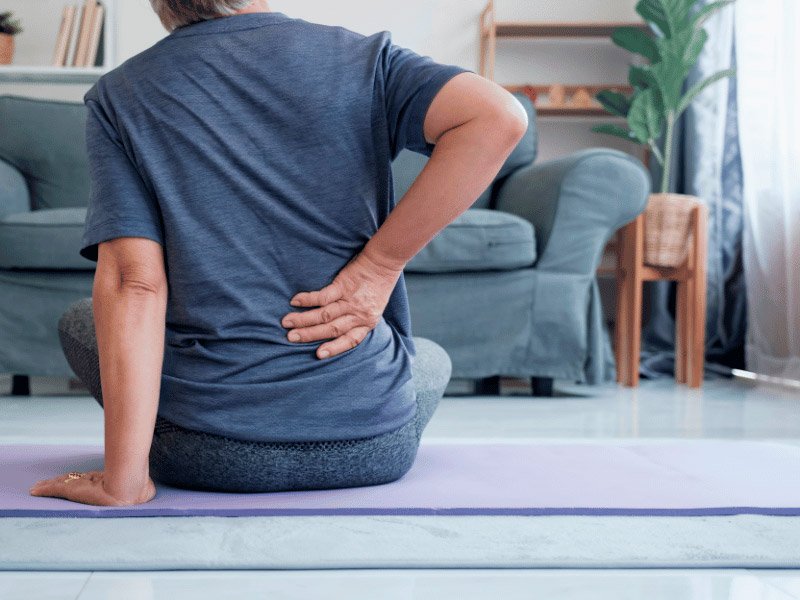
Sciatica is pain that extends along the sciatic nerve, which runs from the lower back through the buttocks and down the legs.
This pain is usually caused by compression of the nerve, usually due to a herniated disc or bony overgrowth.
The most common symptoms of sciatica include:
- Pain radiating from the lower back into the legs
- Inflammation
- Numbness or weakness in the affected leg
At Mombaty, we recommend you consider Vinyasa yoga as a complementary approach to relieving the symptoms of sciatica.
Benefits of Vinyasa Yoga for sciatica
1. Strengthens muscles and relieves tension
Vinyasa yoga includes specific postures that help strengthen the muscles surrounding the sciatic nerve, relieving pressure on it and improving flexibility.
Postures such as downward facing dog pose (Adho Mukha Svanasana) and child’s pose (Balasana) are ideal for stretching and relaxing the lower back, relieving discomfort.
2. Improves circulation and reduces inflammation.
Smooth transitions between postures increase blood circulation and help reduce inflammation around the sciatic nerve.
It is essential to adapt postures according to individual needs and avoid sudden movements that may aggravate pain.
3. Conscious breathing to reduce pain
Deep, conscious breathing is key in Vinyasa yoga.
Techniques such as deep abdominal breathing (Pranayama) help relax the nervous system and reduce the perception of pain.
Practicing controlled breathing during postures can amplify the benefits of yoga for sciatica.
Vinyasa Yoga postures to relieve sciatica
1. Boat posture (Navasana)
Strengthening the core is essential to provide support to the spine.
The boat pose helps stabilize the abdominal muscles, which reduces pressure on the lower back and sciatic nerve.
2. Hips opening (Eka Pada Rajakapotasana)
The pigeon pose is excellent for releasing tension in the hips, which can reduce pressure on the sciatic nerve.
This posture deeply stretches the piriformis muscles, helping to relieve pain.
3. Supine spinal twist (Supta Matsyendrasana)
This gentle twisting posture promotes flexibility of the spine and reduces stiffness in the lower back.
It relieves pressure on the sciatic nerve and improves mobility.
4. Bridge Pose (Setu Bandhasana)
The bridge pose strengthens the buttocks and lower back muscles, providing additional stability to the spine.
Performing this posture regularly can relieve sciatica and improve overall posture.
5. Cat-Cow Pose (Marjaryasana-Bitilasana)
This dynamic movement between cat posture and cow posture is ideal for gently mobilizing the spine and relieving stiffness in the lower back.
Tips for a safe practice of Vinyasa Yoga with sciatica
At
Mombaty, we recommend you to follow these tips to get the most out of your Vinyasa yoga practice:
- Listen to your body: Always adapt the intensity of the postures according to your comfort level.
- Use accessories: Incorporating blocks, straps or blankets can help improve alignment and facilitate postures.
- Neutral posture: Maintain a neutral posture of the spine in forward and backward bends to avoid injury.
- Smooth transitions: Make smooth transitions between postures to reduce low back stiffness and avoid worsening pain.
Incorporating Relaxation and Mindfulness
Relaxation is essential at the end of any yoga session.
The corpse pose (Savasana) is ideal for releasing all the tension accumulated during the practice.
In addition, you can incorporate mindfulness meditation to improve the mind-body connection and reduce stress, a factor that often aggravates sciatica.
Yoga Vinyasa as a therapy for sciatica
Vinyasa yoga is a powerful tool for relieving sciatica pain by strengthening, stretching and relaxing the muscles involved.
Practicing regularly and consciously, adapting the postures to your needs, can significantly improve your quality of life.
Remember that although yoga is a beneficial practice, it is always advisable to consult with a health professional before beginning any new exercise routine, especially if you suffer from sciatica or other health problems.
At Mombaty, we encourage you to explore Vinyasa yoga as a complementary option to take care of your physical and mental well-being.